
The market for moderating drinkers continues to develop, but getting your product listed is only half the challenge. How do you persuade consumers to try it, enjoy it and come back for more?
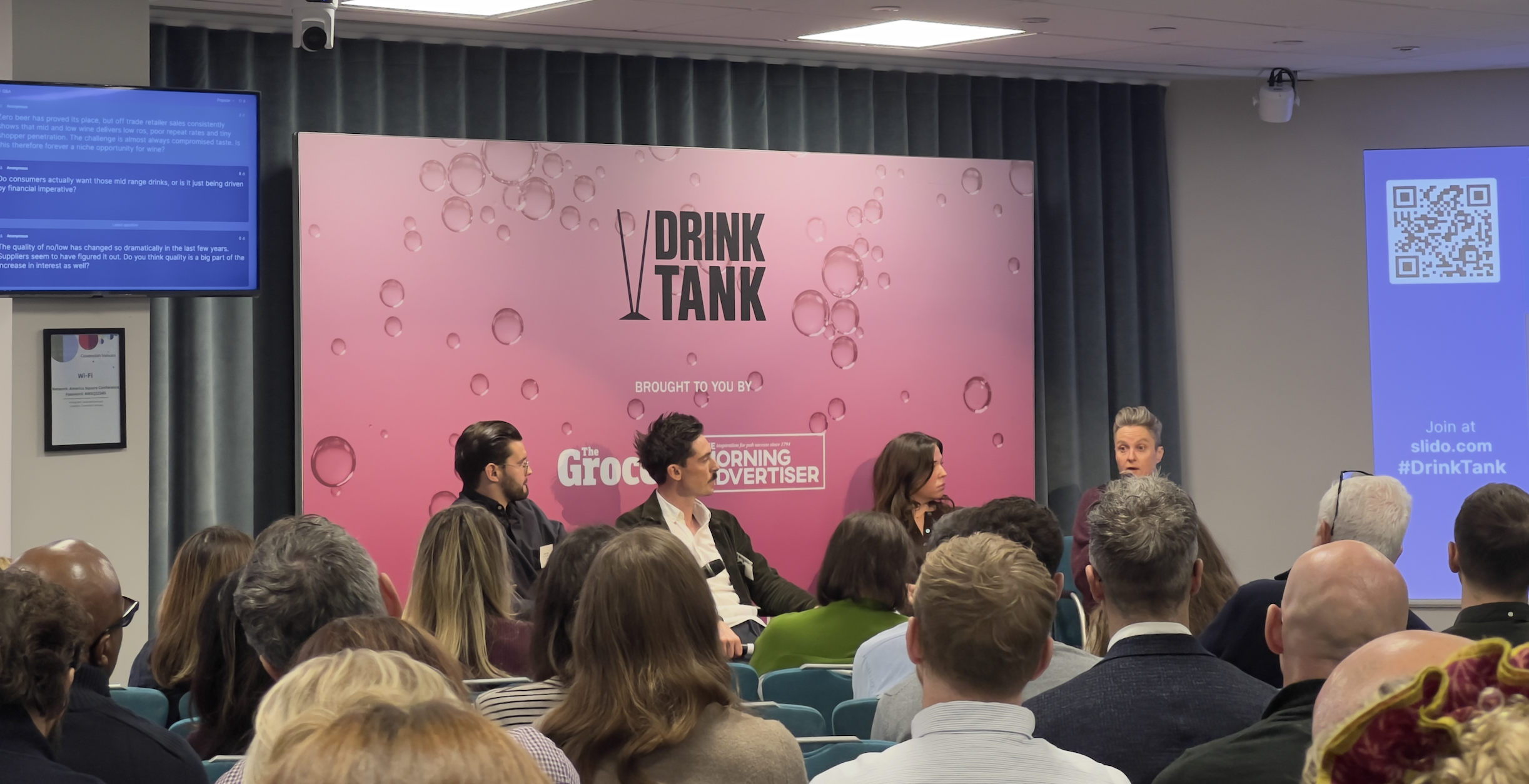
At The Grocer's Drink Tank conference, a panel featuring Laura Willoughby, Co-Founder of Club Soda, Luke Hemsley, Founder of Wednesday's Domaine, and Shauna Clark-Fitzpatrick, Buying Manager at Tesco, discussed the opportunities and challenges facing low, no and mid-strength drinks.
While consumers have more choice than ever, the conversation highlighted several commercial challenges for brands looking to grow in these categories.
From convincing retailers to give up valuable shelf space to getting consumers to reconsider previous experiences with alcohol-free products, success depends on more than having a good product.
1. Your product might be good, but can you convince the buyer?
For emerging low and no-alcohol brands, getting onto supermarket shelves remains a significant hurdle.
Shauna Clark-Fitzpatrick was clear about what matters most when assessing new products.
Taste comes first. If consumers buy something once and don't enjoy it, they're unlikely to return. And with shelf space limited and expensive, poor repeat purchase quickly becomes a problem for retailers.
But product quality isn't enough on its own.
Clark-Fitzpatrick explained that brands need to arrive with evidence of why their product deserves a place on the shelf, including a clear understanding of the retailer's customers and why the proposition will appeal to them.
Buyers are time-poor, and brands that can demonstrate existing demand, consumer understanding and a convincing reason to stock their product have a better starting point.
For your brand: Before approaching retailers, consider what evidence you're bringing to the conversation. Are you demonstrating genuine consumer demand, or simply explaining why you believe the category has potential?
2. Awareness is only half the battle. What about consumer confidence?
Luke Hemsley described two challenges facing Wednesday's Domaine: awareness and appreciation.
Some consumers don't know that good alcohol-free wine exists. Others have tried the category previously, had a disappointing experience and aren't inclined to try again.
That second group can be particularly difficult to win over.
Unlike alcohol-free beer, where established brands such as Guinness and Heineken have helped introduce consumers to the category, alcohol-free wine has historically lacked comparable mainstream exposure.
For Wednesday's Domaine, building confidence has required consistent activity across multiple channels.
Hemsley spoke about the importance of media coverage, awards, social media and being visible in the right places. Together, these help establish credibility for both the brand and the wider category.
There is also a willingness among consumers to pay more for quality, something Laura Willoughby highlighted through her experience with premium alcohol-free products in Majestic.
Consumers aren't necessarily looking for the cheapest alternative. They're looking for something they trust will deliver a good experience.
For your brand: If consumers have misconceptions about your category, what are you doing to change them? Trial, independent recognition, recommendations and earned media can help build confidence before a consumer commits to purchase.
3. Could wholesalers be holding back your growth?
One of the strongest points from the discussion concerned the barriers facing brands trying to enter the on-trade.
Laura Willoughby argued that wholesalers remain one of the biggest obstacles to greater low and no-alcohol availability.
Many pubs, bars and restaurants rely on a relatively small number of suppliers. If a product isn't available through those wholesalers, operators may struggle to stock it, even when they want to.
Willoughby was particularly critical of the limited variety offered by some larger wholesalers, suggesting that too many venues are restricted to a handful of familiar alcohol-free brands.
She noted that this was an issue Club Soda identified as far back as 2015 and one that continues to affect the category.
For emerging producers, that creates a difficult commercial challenge.
You may have a strong product, positive consumer feedback and operators who want to stock it, but still struggle to secure the distribution required to reach them.
Willoughby suggested that venues offering the most interesting ranges are often those prepared to work with smaller wholesalers or purchase directly from producers.
For your brand: Securing consumer demand and securing distribution are two separate challenges. Building relationships with operators, demonstrating demand and creating evidence of successful sales can all help strengthen your case with wholesalers.
4. Are operators measuring the value of low and no correctly?
Another interesting discussion concerned how hospitality operators judge the commercial success of alcohol-free products.
Willoughby suggested that some venues expect low and no-alcohol drinks to sell at the same rate as their alcoholic equivalents.
But that doesn't necessarily reflect their wider contribution to the business.
Customers who have access to drinks that suit their needs may stay longer, visit on different occasions and spend money elsewhere on the menu.
Tim Bird of Cheshire Cat Pubs and Bars shared an example from his business.
Across seven pubs, annual low and no-alcohol sales had grown from approximately £40,000 to £215,000 over four years, with the category currently growing at around 25% year on year.
Bird credited investment in the range, clear drinks lists, staff education and innovation as important contributors to that growth.
He also suggested that the category's success hadn't come at the expense of significant sales elsewhere, apart from some potential substitution from traditional soft drinks.
For operators, the value of a broader drinks range may extend beyond the individual product sale.
For brands, this is a useful consideration when making the case for an on-trade listing.
Rather than focusing exclusively on potential sales volumes, can you demonstrate how your product helps a venue serve more customers, improve choice or make different occasions commercially viable?
5. Is mid-strength the bigger opportunity?
Much of the industry's attention has focused on alcohol-free products, but the panel was particularly interested in the potential for mid-strength drinks.
While changes to alcohol duty in 2023 have encouraged some lower-strength innovation, particularly in beer, the broader opportunity is being driven by consumer behaviour.
Many people still want to drink alcohol. They simply want to consume less of it.
Willoughby suggested that wine could be particularly well suited to mid-strength innovation because consumers often have a strong emotional attachment to the category.
Being able to enjoy a similar number of glasses with substantially less alcohol is an attractive proposition.
It's an area Wednesday's Domaine is actively exploring.
After launching as an alcohol-free wine brand in 2022, the business introduced a range of 6.5% ABV wines in spring 2026.
Hemsley explained that the team had explored different strengths, including approximately 3%, 6% and 9% ABV.
They ultimately settled around 6.5%, finding it offered a more convincing balance between taste, the drinking experience and a meaningful reduction in alcohol.
Importantly, Hemsley sees the same consumer choosing different products for different occasions.
Someone might want an alcohol-free wine on one evening and a mid-strength wine on another.
For Wednesday's Domaine, this also creates new opportunities in the on-trade, particularly around business lunches, midweek occasions and Sunday lunches.
For your brand: The opportunity may not require finding an entirely new audience. It could mean understanding how your existing consumers' needs change across different occasions and whether your range gives them enough flexibility.
6. If consumers don't understand mid-strength, how will they order it?
One of Hemsley's observations was particularly relevant to brands introducing unfamiliar products.
Consumers aren't necessarily walking into pubs and asking for a 7% wine.
Even if demand exists, the category isn't yet established enough for shoppers to know exactly what to look for.
That creates challenges around menu placement, category language and staff recommendations.
The panel also discussed how definitions of mid-strength differ across beer, wine and spirits, making the category harder to communicate consistently.
For your brand: Consumer education becomes an important part of the commercial strategy. If your product offers something different, whether that's lower alcohol content, functionality or an unfamiliar format, consumers need to understand what it is and when they might choose it.
That education doesn't stop once a listing has been secured. Operators and their teams need to understand the proposition too.
What should drinks brands take from the discussion?
Three commercial lessons stood out:
1. Give retailers evidence, not just enthusiasm.
Buyers need confidence that your product will sell and that consumers will return. Taste, existing demand, consumer understanding and a strong proposition all help make the case for distribution.
2. Build trust before expecting trial.
For emerging categories, consumers may need reassurance that the product will deliver. Media coverage, awards, recommendations and opportunities to experience the product can all help overcome uncertainty.
3. Help consumers understand when to choose you.
Moderation takes many forms. Whether you're launching a low-alcohol wine, an alcohol-free spirit or a mid-strength beer, being clear about the occasions your product suits can help translate interest into purchase.
Turning consumer interest into demand
The growth of low, no and mid-strength drinks is creating opportunities for established producers and new entrants.
But the brands that succeed will need to address familiar commercial challenges: getting stocked, standing out, convincing consumers to try something unfamiliar and encouraging repeat purchase.
At Stir, we help drinks brands build awareness, reach new audiences and create reasons for consumers to choose them through PR, influencers and experiences.
For brands operating in developing categories, creating demand involves helping consumers understand not just what your product is, but why they should choose it. If that sounds like something you need support with, get in touch - askus@hellostir.com
This article is based on the panel discussion "Low-No and Mid Strength: Winning Over the Moderate Drinker" at The Grocer's Drink Tank conference in November 2026, featuring Laura Willoughby of Club Soda, Luke Hemsley of Wednesday's Domaine and Shauna Clark-Fitzpatrick of Tesco, with additional contributions from Tim Bird of Cheshire Cat Pubs and Bars. Commercial interpretations and recommendations are Stir's own.